
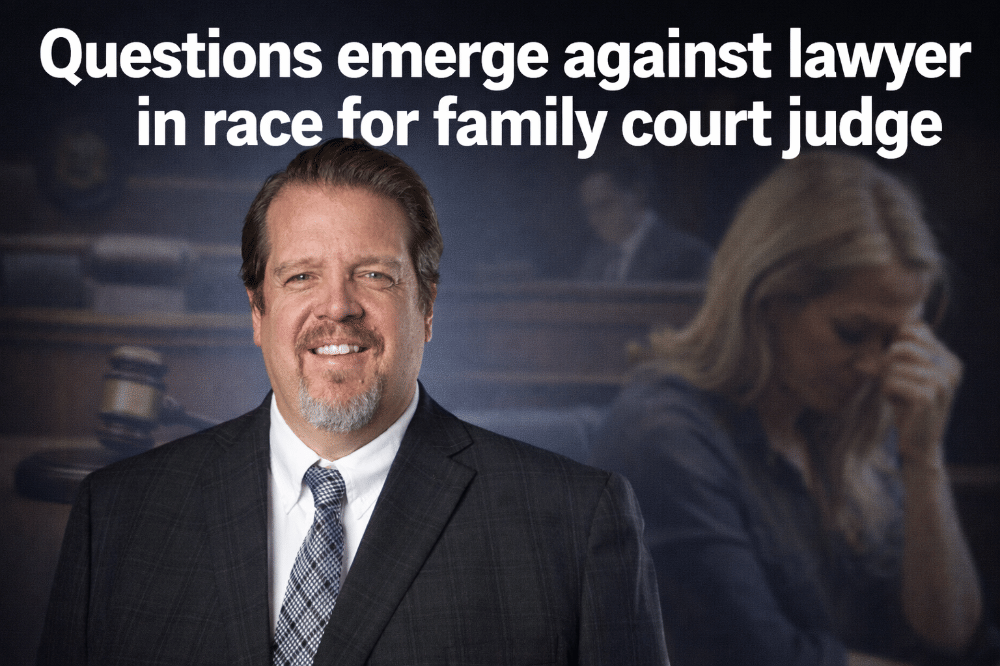
In a race where judgment, ethics, and integrity are on the ballot, a newly filed State Bar complaint is raising serious questions about one of the candidates seeking a seat on the Clark County Family Court bench.
Las Vegas attorney Kurt Smith, who is currently running for District Court Judge in Family Division, Department P, is now the subject of a formal complaint alleging conduct that cuts to the core of the attorney-client relationship.
According to the complaint, Dawn—the producer of the Filed & Furious platform—claims she was represented in a legal matter without her knowledge or consent. The filing further alleges there was no signed retainer agreement and no direct communication between her and Smith at any point.
Instead, the complaint asserts that the alleged representation was carried out through a third party—an arrangement that, if proven true, raises serious concerns about consent, authorization, and professional responsibility.
The complaint has been submitted to the State Bar of Nevada and is currently under review. No findings or determinations have been made at this time.
But the timing—and the nature—of these allegations are difficult to ignore.
Family Court is where some of the most personal, high-stakes decisions are made—where parental rights, custody, and the well-being of children hang in the balance. Voters expect not only legal competence, but strict adherence to ethical standards and clear, transparent communication.
At the heart of this issue is a fundamental question:
Can an attorney-client relationship exist without direct consent or communication?
Legal professionals widely agree that informed consent and clear engagement terms are not optional—they are foundational. Retainer agreements are not just paperwork; they are the baseline protection for both client and attorney.
So what happens when those lines are blurred?
As voters begin to take a closer look at the candidates in this closely watched race, this complaint adds a new layer of scrutiny—one that goes beyond policy positions and into professional conduct.
Of course, a complaint is not a conclusion. The State Bar’s process exists to determine facts, and every individual is entitled to that process.
But elections are not held in a vacuum. They are shaped by information, perception, and trust.
And in this case, the questions may be just as important as the answers.